Test the idea
Start from a precise question, gather data, and fit the simplest model that could answer it.
[00] Independent trading firm
We develop and test ideas, deploy capital selectively, and evaluate every decision with discipline.
[01] Our view
Markets move. Narratives change. Much of what looks like certainty is noise. We built Stillgate around a still point: a process that holds steady, so our views are free to change.

[02] The name
Our symbol is an S built from two walls with a straight passage between them. At its exact centre sits a single still point.
It stands for how we want to work: keep your bearings, and keep moving. What we believe about evidence, risk and integrity stays fixed. What we believe about markets is always open to revision.
[03] What we do

Every strategy begins as a precise, testable question. Researchers build models, look hardest for the reasons they might fail, and only then ask what they might be worth.

We build the research platform, simulation tools and execution systems ourselves, so the people asking the questions can control every assumption underneath the answers.
Data is where every idea is tested, and where most of them end. We treat datasets as instruments: understood, cleaned and versioned before anyone draws a conclusion from them.
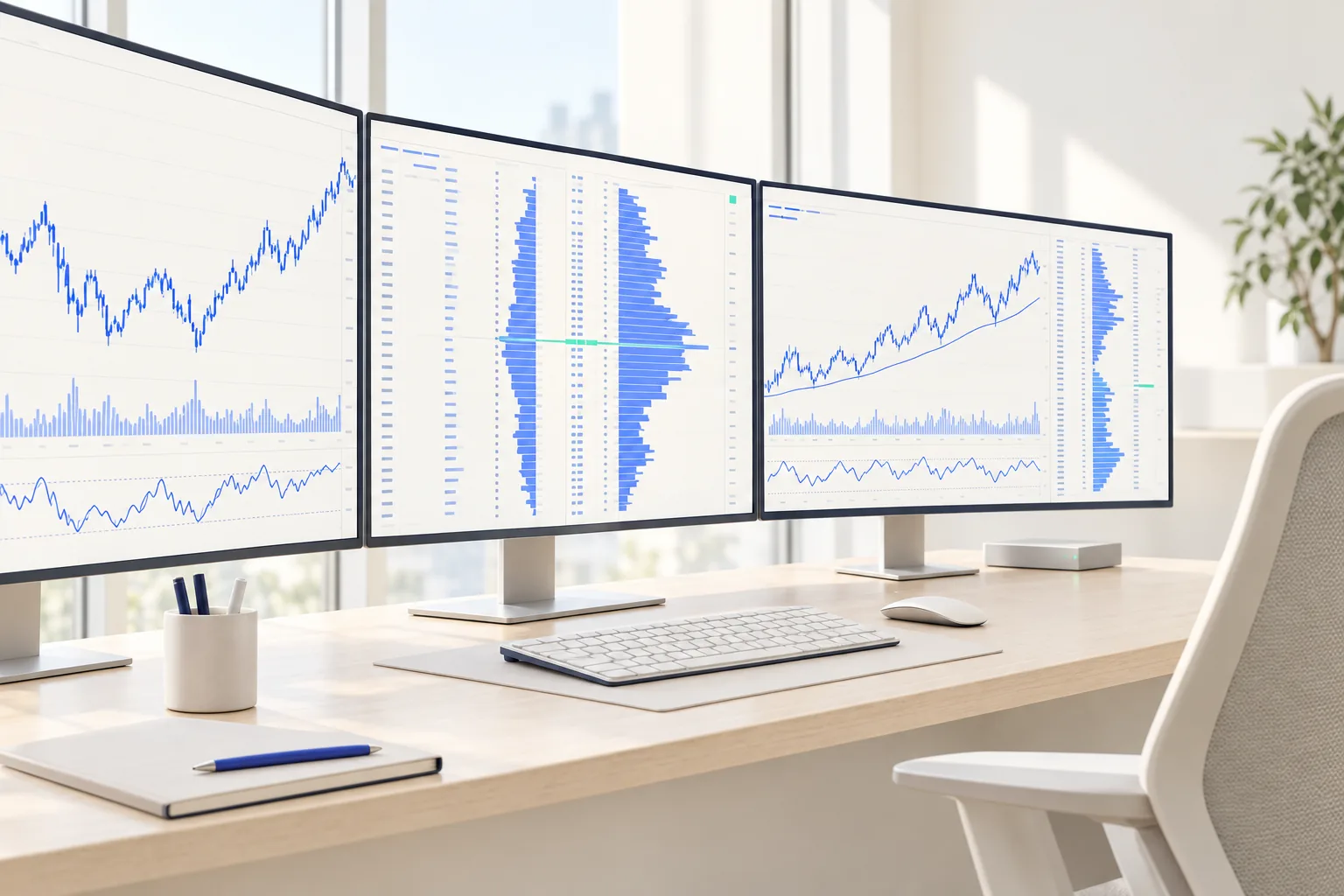
Trading turns research into decisions. Positions are sized to the strength of the evidence, executed with care, and reviewed honestly afterwards, whatever the outcome.
[04] Process
The loop behind every position. The charts are illustrative, not real results.
Start from a precise question, gather data, and fit the simplest model that could answer it.
Weigh what the evidence shows against what it can't. Size to the strength of the work, not the appeal of the idea.
Execute within clear limits, measure the outcome, and feed what we learn back into the research.
[05] The Stillgate problem
You flip a fair coin repeatedly. On average, how many flips does it take to see two heads in a row (HH)? And how many to see heads then tails (HT)?
Most people guess these are equal. Make your guess, then let the simulator check.
After a missed HH (you flip H then T), you're back to the start. After a missed HT (you flip H then H), you still have the H you need. The exact answers are 6 flips for HH and 4 for HT.

[06] Culture
“I don’t know yet” is a respectable answer here. “I’m sure” needs evidence.
Form your own view, then test it hard. Ideas are judged on their merits, not on who proposed them.
Researchers, engineers and traders sit close to the problem and to each other.
If an idea can't be explained simply, it isn't ready to trade.
Own the outcome, including what didn't work, and share what you learned.
We are building an institution, not a single trade.
Reading groups, internal talks and time to explore problems that don't pay off immediately.
[07] Careers
We hire for curiosity and rigour, not a specific background. These are the areas we hire in.
[08] Contact
For careers, partnerships or general enquiries, email us and we'll reply as soon as we can.